
 By Shukla Dhaval
Introduction
AQI (Air Quality Index) helps people understand how clean or polluted the air is, which guides daily choices and public health warnings. Air pollution harms lungs, hearts, crops, and ecosystems so monitoring AQI (Air Quality Index) becomes a public priority. Governments and local agencies track pollutant levels across cities and regions and report a simple index that anyone can read. Clear AQI values let schools, workplaces, and medical staff advise sensitive groups to limit outdoor activity when the air poses higher risk, and they help plan actions that reduce exposure and lower overall pollution.
Understanding AQI (Air Quality Index)
Local AQI can change with weather and time of day. Temperature inversions trap pollution near the ground and raise local values. Winds can bring smoke from distant fires while calm air keeps pollutants in place. Knowing these links helps officials warn residents and plan measures.
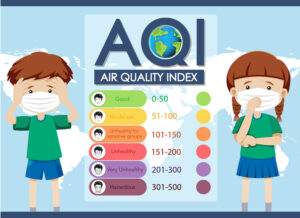
AQI summarizes concentrations of common pollutants into a single number to show health risk
AQI summarizes concentrations of common pollutants into a single number to show health risk. Stations measure PM2.5, PM10, ground level ozone, nitrogen oxides, sulfur dioxide and carbon monoxide. Each pollutant affects health in different ways so the index converts concentrations to a comparable scale that guides public action and daily guidance.
| AQI Range | Air Quality Level | Health Impact |
|---|---|---|
| 0 – 50 | Good | Air quality is satisfactory with minimal risk |
| 51 – 100 | Moderate | Acceptable but may affect sensitive individuals |
| 101 – 200 | Unhealthy for sensitive groups | Children and older adults may experience discomfort |
| 201 – 300 | Poor | Many individuals may experience health effects |
| 301 – 400 | Very Poor | Serious respiratory issues may occur |
| 401 – 500 | Severe | Hazardous air conditions |
Why AQI matters for health and policy
AQI guides public health warnings and work schedules to reduce exposure for sensitive people. Long term AQI records show hotspots and help place schools and clinics away from polluted roads. Data driven plans focus effort where it will cut the most harm.
High AQI values increase hospital visits for breathing and heart problems, reduce outdoor work capacity, and harm vulnerable groups including children, older adults and people with lung disease. Daily AQI alerts help residents choose travel routes and plan outdoor events to avoid heavy pollution. Policymakers use long term AQI records to locate pollution hotspots and to measure the impact of control measures. Data driven planning lets cities phase out highly polluting vehicles, restrict open burning, or upgrade public transport where it will make the largest difference.
Methods for controlling and improving AQI
Traffic and vehicle emission control
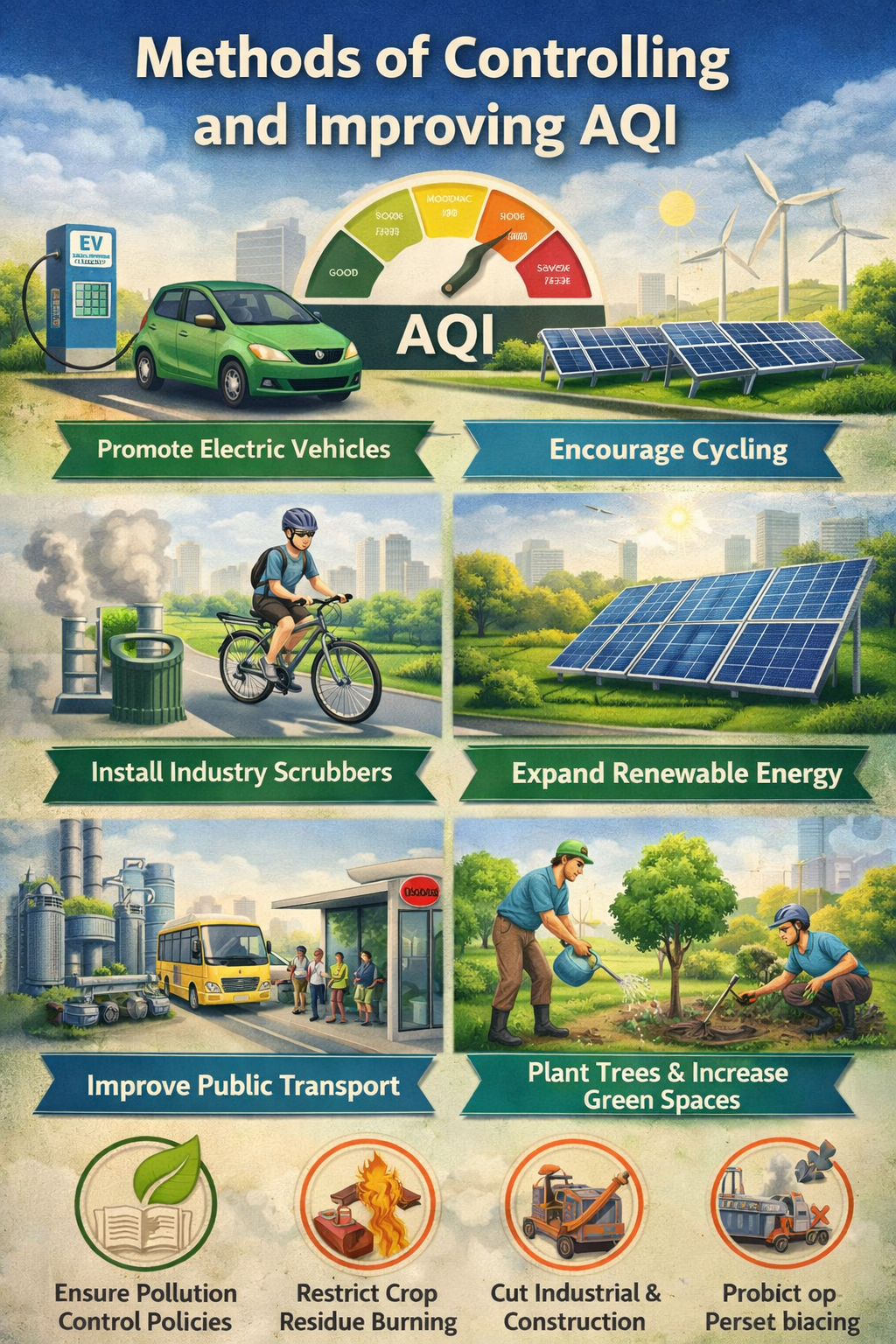
Small policy shifts can cut urban emissions fast. Low emission zones and clean fuel use reduce exhaust smoke. Better traffic flow and vehicle checks lower idle time and fuel waste. Shifting fleets to electric reduces local exhaust quickly.
Road transport contributes a large share of urban pollution through exhaust smoke, brake and tire wear, and fuel evaporation. Managing traffic and cleaning vehicle fleets reduces AQI quickly in many cities. Authorities accelerate change by promoting low emission vehicles and electric mobility while expanding public transport capacity. Regular inspection and maintenance reduce individual vehicle emissions while low sulfur fuels help catalytic systems work properly. Traffic flow improvements such as signal timing and smoother routing cut stop start patterns and yield immediate air quality gains in busy corridors.
Industrial measures to cut pollution
Plants can add filters and switch to cleaner fuels to cut emissions. Heat recovery and better material choices reduce the need to burn fuel. Regular audits find leaks and inefficiencies that increase emissions without benefit.
Manufacturing plants, power stations and refineries emit gases and particles that raise AQI across regions. Industry can reduce emissions by installing filters, scrubbers and precipitators that trap particles before they leave chimneys. Switching to cleaner fuels and energy efficient processes lowers combustion related pollutants. Continuous emission monitoring helps regulators enforce limits by tracking real time data. Cleaner production methods and material recycling reduce raw material demand and lower the total pollution burden over the plant life cycle.
Curbing dust and construction related particles
Covering materials, watering roads and using barriers keeps dust down. Scheduling and short haul distances limit the area of disturbance. Training on load limits and exit cleaning prevents dusty spills into public streets.
Construction, mining and road works kick up large amounts of dust that raise PM levels locally. Managing dust requires simple field measures such as covering exposed soils, watering haul roads, and using dust screens around sites. Proper planning of material delivery and storage reduces handling losses and keeps particles from spreading. Stabilizing stockpiles and using wheel washers at exits stop dusty runoff onto public streets. Effective dust control protects nearby schools and residential areas and helps reduce short term peaks in AQI.
Promoting clean energy and efficiency
Solar and wind power cut pollution linked to coal plants. Better building design and efficient appliances lower overall energy use. Community solar and incentives speed adoption of clean power.
Shifting electricity supply toward solar, wind and hydro power reduces pollution linked to coal and oil burning. Energy efficiency programs that improve building insulation and appliance design cut overall demand and lower emissions across the grid. Distributed solar on rooftops displaces peak fossil fuel generation and eases local air quality burdens. Incentive policies such as subsidies accelerate clean energy adoption while phased coal plant retirements deliver long term AQI benefits.
Strengthening waste management and stopping open burning
Regular waste pickup and recycling stop household burning. Composting turns organics into soil rather than smoke. Clean small scale waste to energy plants can use refuse without open fire.
Open burning of municipal and agricultural waste releases smoke and toxic gases that spike AQI values in nearby towns. Formal waste collection and recycling systems keep combustible material from being burned. Composting programs for organic waste transform biomass into useful soil amendments without smoke. For crop residues authorities can support mechanical collection for bioenergy or provide incentives for no burn practices. Public education about the harms of burning combined with alternate uses reduces the incentive to burn.
Expanding urban green cover and natural filters
Trees and plants trap dust and absorb gases while shaded areas cut local heat. Green roofs and roadside buffers work in dense areas. Community care for plantings keeps the benefit long term.
Trees and plants absorb pollutants and release oxygen through natural biological processes. Vegetation captures dust particles and harmful gases from the atmosphere so green areas significantly improve air quality. Planting green belts along highways and near industrial zones slows pollutant dispersion into neighborhoods. Urban parks and street trees create microclimates that reduce local PM concentrations and provide healthier spaces for residents. Selecting species that thrive in local soils and require little water ensures long term survival.
Improving indoor air and public guidance
Good ventilation and filtered air reduce indoor exposure during high AQI days. Avoiding indoor smoking and using clean cooking methods cuts indoor pollution. Schools and workplaces can move activities indoors when needed.
People spend most of their time indoors where poor ventilation and indoor sources can worsen exposure during high AQI days. Improving ventilation using filtered fresh air systems and avoiding indoor smoking reduce pollutant levels inside homes and workplaces. Public advisories based on AQI help institutions schedule outdoor activities and protect vulnerable groups. Schools can shift recess indoors on unhealthy days and hospitals prepare additional respiratory support. Distributing low cost air cleaners to at risk groups helps reduce exposure during peak pollution periods.
Monitoring networks and public data access
Combining fixed monitors, mobile sensors and satellites gives robust AQI maps. Open dashboards and mobile alerts help people avoid hotspots and plan travel. Low cost sensors extend coverage at neighborhood scale.
Robust monitoring networks that combine fixed stations, mobile sensors and satellite data provide accurate AQI maps across urban regions. Open data platforms let researchers and community groups analyze trends and hold polluters accountable. Low cost sensors expand coverage in neighborhoods lacking official monitors which helps identify local hotspots near schools or markets. Real time public dashboards and mobile alerts increase community engagement and let individuals make daily choices to reduce exposure.
Regulation enforcement and economic incentives
Clear legal limits and real time monitoring make enforcement practical. Subsidies, retrofit grants and market tools help finance cleaner tech. Transparent reporting links permits to actual performance.
Strong laws set pollutant limits for industries and vehicles while enforcement ensures compliance. Authorities use fines, emission trading or subsidies to shift behavior. Economic incentives for cleaner technologies such as grants, tax credits and low interest loans encourage early adoption. Clear timelines for phase outs of highly polluting equipment give industries time to adapt while ensuring steady long term AQI improvement.
Emergency responses and health services
AQI based triggers let cities scale measures like vehicle restrictions or factory curfews. Mobile clinics and added respiratory care support vulnerable people during acute events. Clear public messages speed protective action.
During acute pollution events authorities should issue health warnings, limit outdoor work and restrict heavy polluting activities until conditions improve. Emergency measures can include temporary vehicle bans, closure of polluting units and extra public transport to reduce emissions fast. Health services mobilize to support affected individuals through mobile clinics and extended hours for respiratory care. Preparing emergency protocols based on AQI thresholds saves lives and reduces short term hospital burden when severe episodes strike.
Community engagement and behavior change
Individual actions add up when many people adopt cleaner habits such as using public transport avoiding open burning and choosing efficient stoves. Local campaigns that explain how daily choices influence AQI make behavior change more likely. Community tree planting cleanup drives and cycling promotion events create social momentum for cleaner air. When community members participate in monitoring and local planning they gain a direct stake in long term AQI improvement and hold leaders accountable for follow through.
Personal and workplace actions
People and employers can adopt simple habits that cut emissions and reduce local AQI peaks. Choosing public transport, cycling, walking or shared rides lowers vehicle numbers and cuts exhaust in busy corridors. Employers can offer flexible hours, remote work and incentives for transit use to reduce commute surges. At home, using clean cooking fuels and efficient stoves cuts indoor smoke and reduces neighborhood pollution. Regular vehicle checks, timely filter changes and proper tyre inflation keep engines efficient and lower emissions while also saving money on fuel and health costs today.
Conclusion
AQI (Air Quality Index) gives a single clear measure that links air pollution levels to health guidance and policy action, which helps communities protect public health and plan cleaner cities. Reducing AQI requires a mix of technology, regulation, urban planning and public participation that targets vehicles, industry, energy and waste management. Sustained progress needs strong monitoring, transparent data, enforcement, incentives for cleaner choices and daily habits that reduce emissions. When governments and communities work together AQI values can fall and cities become more livable for present and future generations.