
 By Shukla Dhaval
Introduction
The ignition system forms a vital part of every petrol powered engine because it produces the spark that begins combustion inside the cylinder. When a vehicle or machine starts running the air and fuel mixture must ignite at the correct moment during the compression stroke. The ignition system performs this task by creating a high voltage spark across the spark plug electrodes. Accurate spark timing allows the engine to start quickly run smoothly and deliver steady power during operation. A dependable ignition system also supports efficient fuel burning which improves engine performance reduces emissions and ensures reliable operation in vehicles generators pumps motorcycles and many other petrol powered machines.
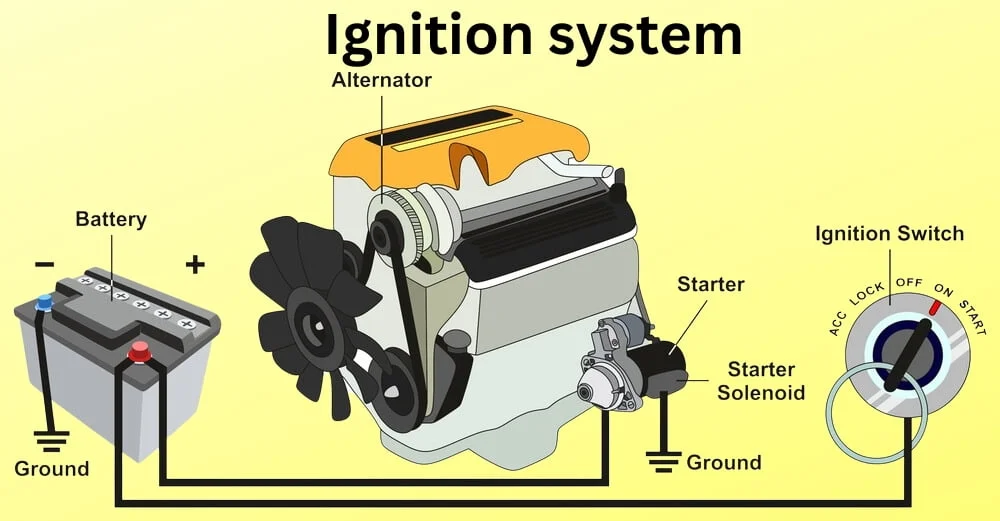
What Is an Ignition System
An ignition system refers to a group of electrical and mechanical components that generate and control the spark required to ignite the compressed air fuel mixture inside a petrol engine cylinder. Petrol engines operate through spark ignition which means fuel cannot burn until a spark initiates combustion. The ignition system ensures that this spark appears at the correct moment in the engine cycle.
The process begins when the battery supplies electrical energy to the ignition circuit. The ignition coil converts this low voltage electricity into high voltage energy capable of jumping across the spark plug gap. The spark plug then ignites the compressed mixture and combustion begins inside the cylinder. Combustion pushes the piston downward and produces mechanical power.
Every petrol engine uses some form of ignition system although designs vary according to engine technology. Older engines rely on mechanical distributors while modern engines use electronic control units and coil on plug systems. Despite these design differences the purpose remains the same which is creating a strong spark at the correct time.
Importance of ignition in petrol engines
The ignition system controls combustion timing which greatly influences engine performance fuel economy and emissions. Correct spark timing allows fuel to burn efficiently during the power stroke. Efficient combustion releases maximum energy from the fuel and ensures smooth engine operation.
If the spark occurs too early the air fuel mixture ignites before the piston reaches the ideal position. This situation produces knocking sounds and places stress on engine components. If the spark occurs too late combustion begins after the piston moves downward which reduces power and increases fuel consumption.
Engine designers focus strongly on ignition accuracy because precise timing allows engines to produce stable power under different loads and speeds. Reliable ignition also supports easier starting and consistent performance.
Functions of the Ignition System
The ignition system performs several critical tasks that allow a petrol engine to start and operate effectively. These tasks include generating high voltage electricity controlling spark timing distributing sparks to cylinders and ensuring stable combustion. Each function contributes to efficient engine operation.
Ignition timing
Ignition timing refers to the precise moment when the spark plug generates a spark during the engine cycle. The spark normally occurs near the end of the compression stroke when the piston approaches the top of the cylinder. Accurate timing ensures that combustion pressure develops at the correct moment.
Engine speed load temperature and throttle position influence ignition timing requirements. Modern engines use sensors and electronic control units to adjust spark timing continuously according to operating conditions. This adjustment helps engines maintain efficiency across different speeds and loads.
Proper timing improves engine power and fuel economy while preventing knocking or incomplete combustion. Advanced ignition systems provide accurate control that supports smooth engine performance.
Starting the engine
During engine start the ignition system must generate a strong spark even when the crankshaft rotates slowly. The starter motor begins turning the engine and compressing the air fuel mixture inside the cylinders. The ignition system then produces sparks that ignite the mixture and allow the engine to begin running independently.
Cold weather or weak batteries may reduce available electrical power during starting. Strong ignition components ensure that sufficient voltage reaches the spark plugs during this stage. Reliable starting depends heavily on effective spark generation.
Vehicles with efficient ignition systems often start quickly and require less cranking time. This reliability improves daily usability for drivers and equipment operators.
Maintaining engine performance
The ignition system influences how smoothly the engine runs during normal operation. Each cylinder must ignite its fuel mixture at the correct moment in order to maintain balanced power output. Even small timing errors may cause rough engine operation or reduced efficiency.
Modern ignition systems coordinate spark generation with fuel injection and airflow management. Electronic sensors measure engine speed crankshaft position and intake pressure. Control units then calculate optimal spark timing for each operating condition.
Accurate spark control improves acceleration throttle response and engine stability. These benefits enhance the driving experience and increase mechanical reliability.
Emissions control
Ignition timing also affects exhaust emissions produced by petrol engines. Complete combustion reduces unburned fuel particles and harmful gases released into the atmosphere. Efficient spark timing helps ensure that the air fuel mixture burns completely inside the cylinder.
Modern vehicles integrate ignition control with emission management systems. Sensors monitor oxygen levels exhaust gases and combustion conditions. Electronic control units adjust spark timing to maintain efficient burning and reduce pollution.
Accurate ignition therefore contributes to environmental protection while maintaining engine performance.
Components of the Ignition System
The ignition system consists of several parts that work together to generate and distribute high voltage electricity to the spark plugs. Each component performs a specific function in the process of producing sparks and controlling timing.
Battery
The battery supplies electrical energy to the ignition circuit and other electrical systems in the vehicle. During engine starting the battery provides power to the ignition coil and control components. A healthy battery ensures that sufficient voltage reaches the ignition system.
Most automotive batteries store energy in chemical form and release electricity when the circuit activates. When the engine runs the charging system restores the battery charge so it remains ready for the next start.
Weak batteries may reduce spark strength which can make engine starting difficult. Regular battery maintenance ensures reliable ignition performance.
Ignition switch
The ignition switch allows the operator to control electrical power flow to the ignition system. When the switch moves to the start or run position the electrical circuit connects the battery to the ignition coil and other components.
Turning the switch to the off position disconnects power and stops spark generation. This simple control mechanism allows safe operation and convenient engine shutdown.
Modern vehicles integrate ignition switches with electronic security systems and keyless start mechanisms.
Ignition coil
The ignition coil converts low voltage electricity from the battery into high voltage electricity required to create sparks. This component functions as a transformer that uses electromagnetic induction to increase voltage dramatically.
The coil contains two windings known as primary and secondary windings. Current flowing through the primary winding creates a magnetic field. When this current suddenly stops the magnetic field collapses and induces high voltage in the secondary winding.
The resulting high voltage travels through ignition wires toward the spark plugs. Voltage levels may reach tens of thousands of volts during operation.
Distributor
Traditional ignition systems use a distributor to direct high voltage electricity to each spark plug in the correct firing order. The distributor contains a rotating rotor connected to the engine camshaft.
As the rotor spins it passes near metal contacts that connect to spark plug wires. Each rotation delivers voltage to the appropriate cylinder at the correct time. This process ensures proper combustion sequence within the engine.
Although distributors served many engines for decades modern systems often replace them with electronic control systems.
Spark plugs
Spark plugs sit inside the cylinder head and create the spark that ignites the air fuel mixture. Each spark plug contains a center electrode and a ground electrode separated by a small gap.
When high voltage reaches the plug the electrical energy jumps across the gap creating a spark. This spark ignites the compressed mixture inside the combustion chamber and begins the power stroke.
Proper spark plug condition ensures consistent combustion and reliable engine performance.
Ignition control module
Modern ignition systems include an ignition control module which manages spark timing electronically. Sensors measure crankshaft position engine speed temperature and other variables. The module processes this information and determines when to trigger the ignition coil.
Electronic control allows highly accurate spark timing that adapts to changing operating conditions. This precision improves fuel efficiency and engine performance.
The control module replaces many mechanical components used in older ignition systems.
Different Types of Ignition Systems
Engine technology has evolved significantly over time and ignition systems have improved alongside these developments. Several designs exist which differ in complexity accuracy and reliability.
Conventional mechanical ignition system
Early petrol engines used conventional ignition systems that relied on mechanical contact points to control current flow through the ignition coil. These contact points opened and closed as the engine rotated.
When the contact points opened the magnetic field in the ignition coil collapsed and produced high voltage electricity. The distributor then routed this voltage to the spark plugs.
This system operated effectively yet required frequent maintenance because mechanical parts wore out with use.
Electronic ignition system
Electronic ignition systems replaced mechanical contact points with electronic sensors and solid state components. Sensors detect crankshaft position and send signals to electronic control modules.
The control module processes these signals and triggers the ignition coil electronically. This design improves spark accuracy and reduces maintenance requirements.
Electronic ignition systems respond quickly to engine speed changes and provide reliable performance under various conditions.
Distributorless ignition system
Distributorless ignition systems remove the traditional distributor and use separate ignition coils for pairs of cylinders. Electronic control units determine when each coil should fire.
This design reduces mechanical complexity and increases reliability because fewer moving parts exist. Each coil produces sparks for specific cylinders without mechanical routing.
Distributorless systems became widely used in vehicles during the late twentieth century.
Coil on plug ignition system
The coil on plug design places an individual ignition coil directly above each spark plug. This arrangement eliminates high voltage wires and reduces energy losses during transmission.
Electronic control units manage each coil separately which allows extremely precise spark timing. This design supports high engine efficiency and reliable ignition performance.
Modern vehicles commonly use coil on plug ignition systems due to their accuracy and durability.
Spark ignition system
Spark ignition systems belong to petrol engines which rely on electric sparks to ignite fuel. The ignition system generates sparks through battery powered or magneto powered circuits.
Motorcycles generators lawn tools and automobiles use spark ignition technology widely. Accurate spark timing allows these engines to operate efficiently.
Compression ignition system
Compression ignition engines operate differently from petrol engines. Diesel engines compress air strongly until the temperature becomes high enough to ignite injected fuel automatically.
No spark plug or ignition system exists in diesel engines because combustion begins through compression heat alone. This principle distinguishes diesel engines from spark ignition engines.
Conclusion
The ignition system remains one of the most important parts of any petrol engine because it produces the spark that initiates combustion inside the cylinder. Accurate spark timing ensures efficient burning of the air fuel mixture which allows the engine to generate stable mechanical power. Over time ignition technology has advanced from mechanical contact point systems to sophisticated electronic and coil on plug designs that deliver reliable performance and reduced maintenance. Understanding the ignition system helps engineers technicians and enthusiasts appreciate how petrol engines operate and how precise spark control contributes to engine efficiency durability and environmental responsibility.